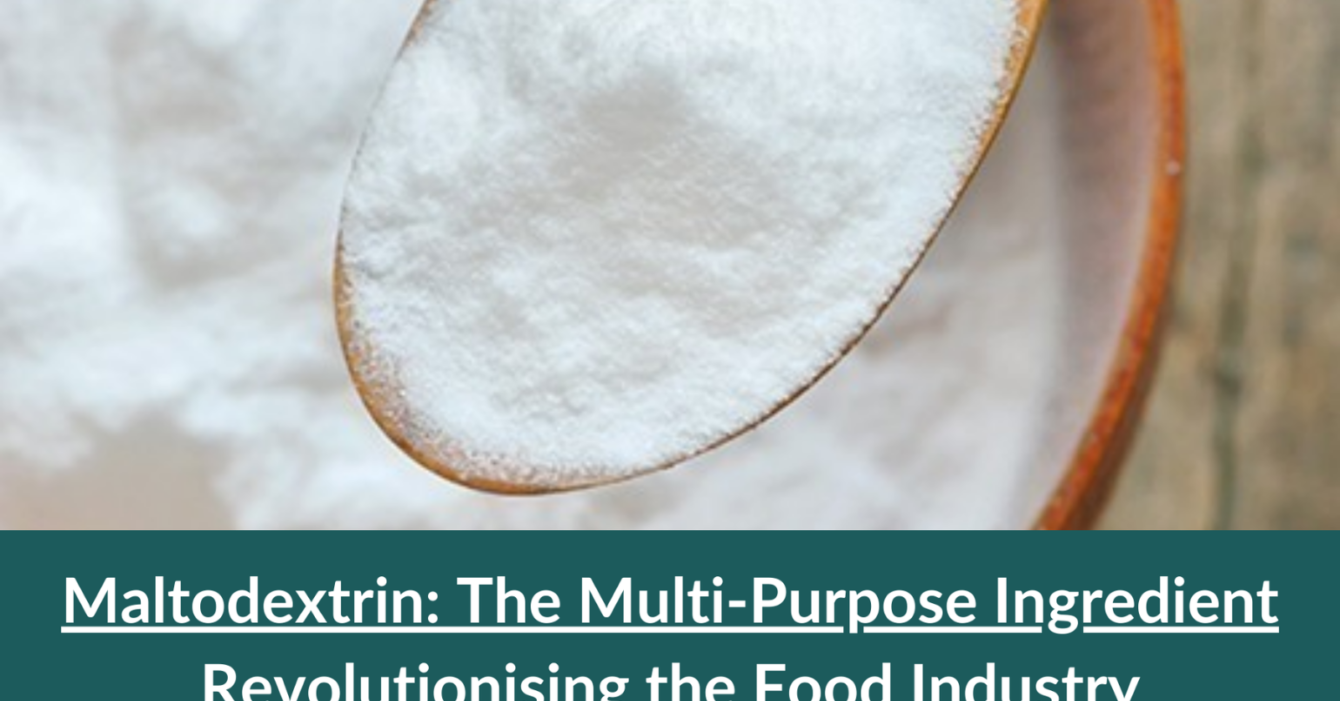
Maltodextrin plays an important role in nutraceutical products because it serves both functional and nutritional purposes. In supplement manufacturing, it is widely used as a carrier, bulking agent, and source of fast-digesting carbohydrates. For many formulations, this makes it a highly practical ingredient rather than a controversial one.
One of the biggest advantages of maltodextrin is its ability to improve the physical quality of powders. It helps with flowability, mixing, spray drying, and uniform distribution of active ingredients. This is especially useful in protein blends, instant nutrition powders, sachets, and powdered drink mixes where consistency matters. It also supports better mouthfeel and reduces the harsh, gritty texture that can occur in concentrated formulations.
Maltodextrin is also valued as a great carbohydrate source in critical nutrition products. In products designed for patients with higher energy needs, reduced appetite, or difficulty consuming larger meals, maltodextrin provides easily digestible carbohydrates that can help deliver calories in a compact format. This makes it useful in oral nutrition supplements, recovery formulas, and specialized medical nutrition products. Because it is rapidly absorbed, it can be especially helpful when a quick energy supply is needed.
There is also a lot of confusion online about maltodextrin. In reality, its value depends on how it is used, in what quantity, and in which product category. It should not be viewed only as a filler. In well-designed nutraceuticals and critical nutrition formulations, it can be a key ingredient that improves texture, consistency, and energy delivery. It is not appropriate to judge it in isolation without understanding the overall product design.
For brands and formulators, maltodextrin remains relevant because it supports both product development and consumer convenience. When used correctly, it helps create powders that are stable, effective, and easier to formulate at scale.
That is why maltodextrin remains an important ingredient in modern supplement development. The real conversation should not be “Is maltodextrin good or bad?” The better question is: what is its function in this specific nutraceutical product, and is it being used appropriately?